



Chaque dimension d'un pot de cornichons façonne un résultat concret. En fait, la hauteur détermine si un concombre entier peut y être logé sans forcer. Le profil de l'épaule, de la même manière, affecte la vitesse de la ligne de remplissage. La largeur de l'ouverture décide si un client peut retirer le dernier cornichon sans difficulté. Pour les producteurs alimentaires qui développent une ligne professionnelle de pots de cornichons, comprendre ces décisions géométriques en amont permet d'économiser des coûts de retouches ultérieures.
Comment la forme du pot de cornichons affecte ce qu'il contient
Les cornichons se présentent sous plusieurs coupes, et chacun a sa propre géométrie. Les concombres entiers et les longues lances nécessitent une hauteur verticale et une large ouverture. Un pot trop court force les producteurs à tailler le produit pour qu'il rentre, ce qui ajoute du travail et modifie l'offre au consommateur. Un pot à col étroit crée également une expérience de récupération frustrante, surtout vers le fond du pot.
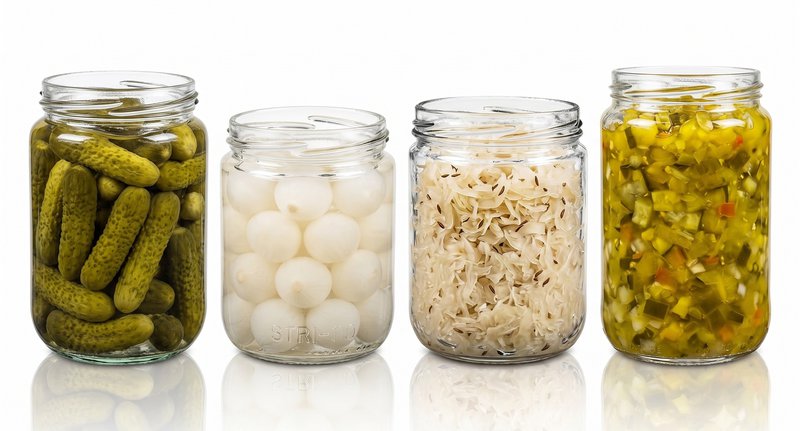
Pour cette raison, les pots à large ouverture sont le format standard pour les cornichons entiers et les longues coupes. L'ouverture plus large permet aux produits épais d'entrer et de sortir sans forcer, et elle donne à la ligne de remplissage un accès clair pendant l'emballage. Pour les cornichons tranchés ou émincés, le rapport hauteur/largeur importe moins.
Cependant, le profil de l'épaule affecte toujours la vitesse de remplissage. Une épaule abrupte, où le pot se rétrécit rapidement du corps au col, ralentit le flux du produit. Un cône plus doux, en revanche, maintient la production en douceur.
Comment le profil de l'épaule et la surface d'étiquetage fonctionnent ensemble
L'épaule est la transition entre le corps du pot et le col. Sa forme affecte deux choses : l'efficacité du remplissage et la surface plane disponible pour une étiquette.
Un pot à parois droites n'a pas d'épaule du tout. Le corps s'étend uniformément de la base au col, ce qui offre la surface d'étiquette maximale et la surface la plus nette pour l'application. C'est pourquoi les profils à parois droites sont un choix courant pour les produits où la visibilité en rayon est la plus importante.
Une épaule conique ou incurvée réduit la surface plane de l'étiquette et peut entraîner le décollement des bords de l'étiquette là où la surface s'incurve. Pour un produit de cornichon au détail, l'étiquette contient l'histoire de la marque, la liste des ingrédients et le poids net. Cette géométrie est donc une contrainte pratique.
En outre, la littérature universitaire sur les emballages en verre confirme que la forme du contenant est généralement déterminée par la nature du produit qu'il contient, les produits en morceaux nécessitant des ouvertures plus larges et des profils plus accessibles.
Ce que la géométrie du pot de cornichons signifie pour la présence en rayon
Un pot haut et étroit utilise moins d'espace en rayon, ce qui convient aux allocations serrées en magasin. En revanche, un pot plus court et plus large a une masse visuelle plus importante au niveau des yeux et convient bien pour un positionnement spécialisé ou artisanal.
Une recherche du International Journal of Food Science and Technology a révélé que les consommateurs préféraient les bocaux en verre de forme cylindrique. De plus, le rapport a également conclu que la forme du bocal peut avoir un impact mesurable sur l'intention d'achat. Cette constatation aide les producteurs à choisir entre un bocal rond économique standard et un bocal de style Paragon plus haut pour une ligne de cornichons haut de gamme.
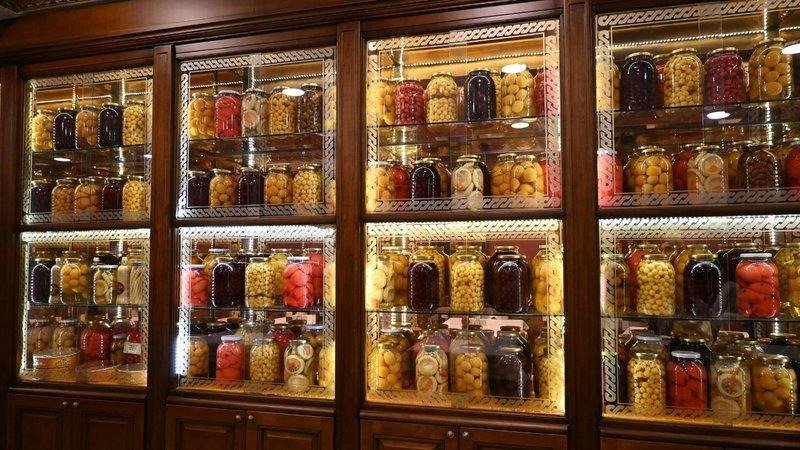
Quel que soit le choix du pot de cornichons, chaque option entraîne des effets concrets en aval. Un grand pot est bien mis en valeur sur les listes de produits en ligne. Un pot trapu, en revanche, s'empile plus efficacement dans une caisse et peut être plus stable pendant le transport.
De plus, un bocal à base large et plate maintient sa position sur un convoyeur sans basculer. Réfléchir à toutes ces considérations de conception avant de s'engager sur un format est beaucoup plus simple que de changer en pleine production après que l'outillage et l'étiquetage sont en place.
Choisir le bon pot de cornichons pour votre ligne de production
Le bon pot de cornichons équilibre l'ajustement du produit, l'efficacité du remplissage, la surface de l'étiquette et la présence en rayon. Pour les producteurs au Canada et aux États-Unis, un fournisseur disposant d'une large gamme de stocks signifie que ces décisions ne nécessitent pas de longs délais de livraison ni de grosses commandes minimales.
La gamme de bouteilles et pots en verre et de trempettes et tartinades de Richards Packaging comprend des formats adaptés à la production de cornichons à différentes échelles. Les options à large ouverture conviennent aux produits entiers et épais. Parallèlement, les profils à parois droites favorisent une forte présentation des étiquettes en magasin. Chaque format s'associe également à des fermetures bien conçues pour garantir des scellés fiables et sans danger pour les aliments.
Apprenez-en davantage sur ce que Richards Packaging peut faire pour vous et vos produits alimentaires. Contactez-nous en ligne et nous serons ravis de développer des solutions pour vos besoins uniques.


