



Imaginez une petite entreprise alimentaire qui s'approvisionne en contenants pour une nouvelle gamme de trempettes à base de vinaigre. Le produit est superbe, la recette est prête, mais l'emballage cède en quelques semaines. Les étiquettes se décollent, les couvercles se fissurent et le contenant commence à se dégrader de l'intérieur. Pour les aliments très acides, un emballage durable n'est pas une option, c'est une obligation ! Concevoir le bon contenant dès le départ permet aux fabricants d'éviter des retouches coûteuses par la suite.
Pourquoi l'acidité est un facteur déterminant dans le choix du contenant
La teneur en acide des trempettes et des tartinades varie considérablement. Le houmous et les produits à base de tahini sont proches du pH neutre. En revanche, les tartinades à base de vinaigre, les trempettes à la tomate et les sauces aux agrumes peuvent descendre bien en dessous d'un pH de 4, un niveau d'acidité qui peut détériorer l'emballage avec le temps.
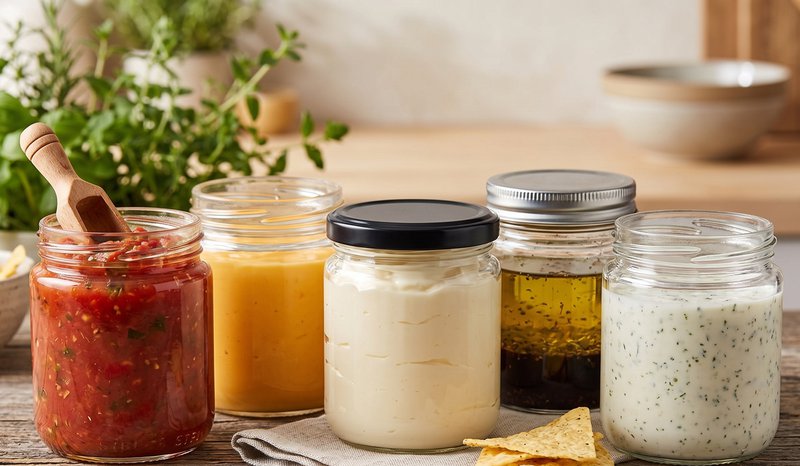
Un contenant mal conçu ne cède pas d'un seul coup. Il se décompose plutôt lentement, affaiblissant les joints, décollant les étiquettes et, dans certains cas, altérant la saveur du produit.
Le polyéthylène haute densité (PEHD) est l'une des solutions d'emballage les plus durables pour les aliments très acides. Ses liaisons carbone-carbone résistent à la fois aux acides et aux alcalis sans se décomposer. Pour les fabricants de tartinades au vinaigre, de trempettes aux agrumes ou de produits fermentés, cette résistance maintient leurs produits stables et leurs emballages intacts pendant toute leur durée de conservation.
Le PEHD offre un emballage durable pour les produits alimentaires très acides
Les bouteilles et les pots en PEHD conviennent parfaitement à la catégorie des emballages pour produits très acides pour plusieurs raisons. Le matériau est léger et robuste. De plus, il résiste facilement aux chocs lors de l'expédition sans risque de casse. Les producteurs qui distribuent leurs produits alimentaires par le biais de la vente au détail ou en ligne savent que la durabilité est importante. Ils veulent que leurs produits alimentaires soient sûrs et stables tout au long des processus de fabrication, de stockage, d'expédition et de livraison.
Le PEHD est également non poreux, de sorte que les acides alimentaires ne s'infiltrent pas dans la paroi du contenant, ce qui simplifie le nettoyage sur une ligne de production. Le PEHD de qualité alimentaire est conforme à la réglementation 21 CFR 177.1520 de la FDA, qui couvre la résine de polyéthylène utilisée dans l'emballage alimentaire.
En pratique, cela signifie qu'il ne libère rien dans le produit et n'altère pas sa saveur. L'Agence canadienne d'inspection des aliments (ACIA) applique les mêmes règles, de sorte que les producteurs des deux côtés de la frontière peuvent utiliser le même contenant conforme.
Pour les trempettes et les tartinades, les pots en PEHD à large ouverture fonctionnent également bien sur la ligne de remplissage. L'ouverture large permet de contenir des produits épais qui ne couleraient pas par un col étroit, et le matériau fléchit à l'impact.
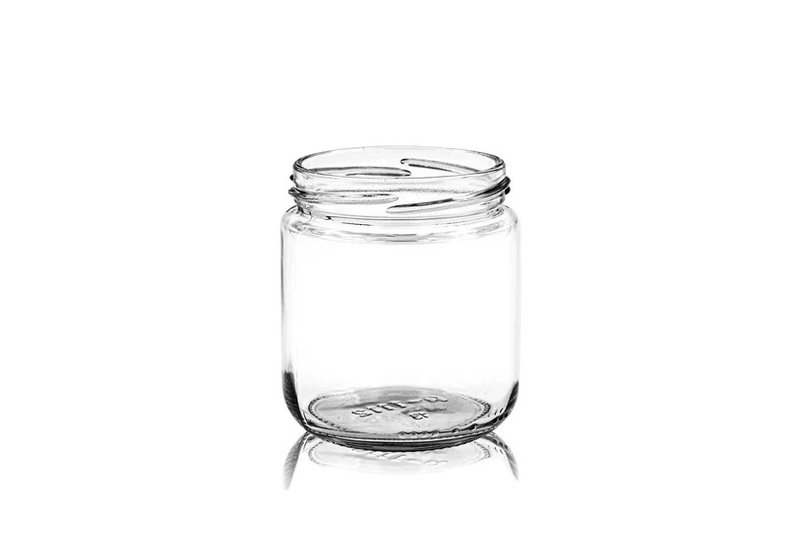
PEHD contre Verre pour les trempettes et tartinades acides
Le PEHD et le verre fonctionnent tous deux de manière fiable avec les produits alimentaires acides, et les deux sont courants dans le secteur des aliments et boissons. Le choix dépend généralement de la façon dont vous vendez et de la façon dont vous expédiez. Le verre signale la qualité en rayon et est entièrement inerte. En revanche, le PEHD est plus léger, moins cher à grande échelle et durable.
Certains producteurs utilisent les deux : des bocaux en verre pour la vente au détail, des contenants en PEHD pour le vrac ou la restauration. Connaître les compromis avant de choisir un format permet d'éviter des retouches ultérieures.
Une étude matérielle évaluée par des pairs classe le PEHD parmi les plastiques les plus largement utilisés dans l'emballage alimentaire et apprécié pour sa résistance et sa résistance chimique. Il convient de noter que certains produits à base de vinaigre peuvent nécessiter un matériau de revêtement plus robuste dans leurs capsules – des tests sont toujours recommandés pour garantir la compatibilité du produit.
Obtenir un emballage durable sans attendre
Pour les producteurs de petite et moyenne taille au Canada et aux États-Unis, la disponibilité est souvent aussi importante que les spécifications. Richards Packaging est un distributeur et fabricant nord-américain de services complets d'emballage de premier plan, fondé en 1912 au Canada. L'inventaire de l'entreprise couvre une large gamme de bouteilles et de pots en verre et en PEHD, avec une livraison généralement effectuée en deux à cinq jours ouvrables. De plus, la profondeur de Richards signifie que vous pouvez commander de plus petites quantités au lieu de bloquer des quantités en vrac à l'avance. Explorez dès maintenant les emballages de trempettes et tartinades.
L'accès à un savoir-faire en matière d'emballage et à des stocks rapides signifie également que les producteurs obtiennent des conseils concrets sur ce qu'il faut choisir pour leurs besoins spécifiques. Cela permet aux clients de baser leur décision sur ce qui fonctionne réellement pour le produit, la ligne de remplissage et le client, au lieu d'opter simplement pour ce qui est en stock.
En savoir plus sur la gamme de bouteilles et pots en plastique de Richards Packaging. Vous pouvez également nous contacter en ligne afin que nous puissions examiner des solutions expertes.


